人々の “健康促進” のために!

人々の “健康促進” のために!
2015年春、沖縄の琉球大学キャンパス内 (産学共同研究棟) に立ち上げた “PAK研究センター” の発足メンバー(左から4人目が、所長の多和田真吉名誉教授)
For detail, click the above image.

2012年11月20日火曜日

"King of Bitters" (Andrographis paniculate) Leave Extract:
An "Inexpensive" PAK Blocker


Recently a group led by Chris Gasche at Vienna Medical University in Austria found that Mesalamine (5-ASA), an Aspirin derivative, blocks the oncogenic kinase PAK (1). This drug was developed around 1977 for the therapy of bowel ulcers. Since both bowel ulcers and cancers are known to require PAK, I started looking for a series of anti-ulcer drugs, in particular natural and inexpensive products, which are used not only for ulcer, and but also for other PAK-dependent diseases such as cancers (in particular solid tumors), inflammatory diseases such as asthma and arthritis, a variety of infectious diseases such as malaria, AIDs and flu, as well as AD (Alzheimer’s disease) and type 2 diabetes.

To my great surprise, the herb extract called HMPL-004, which is the 90% alcohol-extract of leaves of a Southasian plant called “King of Bitters” (Andrographis paniculata) is more potent than Mesalamine to suppress the bowel ulcer, according to the 2011 clinical trial report from a group led by Bill Sandborn at UCSD in collaboration with a Chinese company (HMPL) in Shanghai (2). 1200 mg of HMPL-004 daily is as effective as 4500 mg of Mesalamine when they are orally administered. Thus, it is most likely that HMPL-004 blocks PAK as Mesalamine. Indeed Andrographolide, a diterpene lactone of MW 350, the major anti-ulcer/anti-cancer ingredient in this extract has been shown to block the oncogenic PI-3 kinase, leading the inactivation of both PAK and AKT (3).

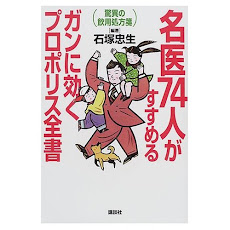
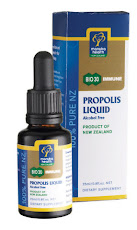
Is this bitter extract available on the market?  Yes, several on-line companies are selling this extract in capsules very inexpensively. 400 mg capsule costs only 10 cents. Ulcer patients need 3-4 capsules daily (costing only 30-40 cents)!  I have previously introduced an inexpensive NZ propolis extract called “Bio 30” for the life-long therapy of NF (neurofibromatosis) which requires PAK. Currently 25 ml bottle of Bio 30 costs around US$7, and since average adults (weighing around 60 kg) need 6-12 ml daily, their daily cost would be US$ 2-4. Thus, compared with Bio 30, this herb extract (called “Chua Xin Lian” in China) is far cheaper. So far at this dose the herb extract causes no side effect. Thus, it would be worth testing the therapeutic effect of HMPL-004 on NF and several other brain diseases such as AD, because it passes the BBB (blood brain barrier).

References:

  1. Khare V, Lyakhovich A, Dammann K, Lang M, Borgmann M, Tichy B, Pospisilova S, Luciani G, Campregher C, Evstatiev R, Pflueger M, Hundsberger H, Gasche C. Mesalamine modulates intercellular adhesion through inhibition of p-21 activated kinase-1. Biochem Pharmacol. 2012, in press.  
2.      Tang T, Targan SR, Li ZS, Xu C, Byers VS, Sandborn WJ. Randomised clinical trial: herbal extract HMPL-004 in active ulcerative colitis - a double-blind comparison with sustained release mesalazine. Aliment Pharmacol Ther. 2011, 33:194-202. 

3.      Lee YC, Lin HH, Hsu CH, Wang CJ, Chiang TA, Chen JH. Inhibitory effects of andrographolide on migration and invasion in human non-small cell lung cancer A549 cells via down-regulation of PI3K/Akt signaling pathway. Eur J Pharmacol. 2010, 632: 23-32.

2012年8月23日木曜日

The Very First Book on PAKs (Elsevier "Insight" Series) in 2013:

PAKs, RAC/CDC42(p21)-activated Kinases: 

Towards the Cure of Cancer and Other PAK-dependent Diseases

edited by Hiroshi Maruta (NF/TSC Cure Org., Melbourne, Australia)


Contents:

Introduction (Hiroshi Maruta)


Pushing the Boundary toward Clinic: 35-Year PAK Research Comes of Age
  

Chapter 1:  “Functional Maturation of PAKs:  from Uni-cellular to Multi-cellular   
                     Organisms”
                      (Masato Okada, Graham Cote, Ramesh Jha, Hiroshi Maruta),
                      Osaka University, Japan

Chapter 2:  “Oncogenicity of PAKs and Their Substrates”
                    (Hong He & Hiroshi Maruta) University of Melbourne, Australia

Chapter 3:  “Natural or Synthetic Therapeutics that Block PAKs”
                    (Hiroshi Maruta, Shanta Messerli, Ramesh Jha)
                    NF/TSC Cure Org,  Melbourne, Australia

Chapter 4:  “PAK1-3 in Infectious Diseases (Malaria, AIDS, flu, etc) ”
                    ( Hiroshi Maruta) NF/TSC Cure Org,  Melbourne, Australia

Chapter 5:  “PAK1 in Brain Diseases” (NF, TSC, glioma, RB, epilepsy, depression, LD) 
                    (Hiroshi Maruta & Shanta Messerli) Marine Biological Lab, USA

Chapter 6:  ”PAK1 in Alzheimer’s and Huntington’s diseases”
                    (Qiu-Lan Ma, Fusheng Yang, Sally Frautschy and Greg Cole)
                    UCLA, USA

Chapter 7:  “PAK1 Controls the Lifespan”
                    (Sumino Yanase & Hiroshi Maruta) Daito Bunka University, Japan

Chapter 8:  3D Structure and Physiological Regulation of PAKs
                  Stefan KnappOxford University, UK

Epilogue (Hiroshi Maruta)

Lateral Thinking is the Key for a Great Leap of Bio-medical Sciences.


PAK is a family of Ser/Thr kinases which are activated by RAS-related G proteins of 21 kDa (p21) called RAC and CDC42. Although the first mammalian PAKs (PAK1 and PAK2) were cloned by Ed Manser’s group in Singapore around 1994 (1), the first member of PAK family was isolated by our team at NIH in a soil amoeba as Acanthamoeba myosin I heavy chain kinase (MIHCK) in 1977 (2), far before a series of small G proteins (p21) such as RAS and RAC/CDC42 were discovered during 1980s. The myosin I is a small unconventional “single-headed” myosin which unlike the conventional double-headed myosins (myosin II) lacks the C-terminal tail, and requires the phosphorylation of its heavy chain by the MIHCK for actin-activation of its intrinsic ATPase activity (2).  Once myosin I is phosphorylated, its interaction with actin-filament (F-actin) triggered a rapid ATP hydrolysis and actomyosin complex (microfilament) associated with leading edge of amoeba contracts, and so-called amoeboid movement or membrane ruffling occurs...

 Shortly after the oncogenic RAS-RAC/CDC42-PAKs signaling pathway was about to be established in mid-1990s, Jeff Field’s group in Philadelphia discovered that RAS indeed activates PAK1, and over-expression of the dominant negative (DN) mutant of PAK1 in both RAS-transformed fibroblasts and NF1-deficient MPNST (malignant peripheral nerve sheath  tumor), in which RAS is abnormally activated, can reverse their malignant phenotype both in vitro and in vivo (4, 5), strongly suggesting that PAK1 is essential for the RAS-induced malignant transformation (anchorage-independent growth) of cells... 

Rather surprisingly, several non-tumor diseases such as AIDS, malaria, flu, Alzheimer’s (AD), Huntington’s (HD), inflammatory diseases such as asthma and arthritis, hyper-tension, epilepsy, depression, schizophrenia and autism associated with fragile X syndrome (FXS) also turned out to be PAK1-dependent. Thus, the potential market value of these PAK1 blockers would be huge in the future...
Afraxis in San Diego, founded by Susumu Tonegawa of MIT (the 1987 Nobel laureate) and his colleagues, recently developed a potent PAK1-specific inhibitor called "FRAX597" (IC50 around 10 nM), which  passes the blood brain barrier. So they can test its effect on the long term memory in mice, and if this PAK1-specific inhibitor can cure or delay a variety of the known PAK1-dependent brain diseases/disorders such as NF (neurofibromatosis) and TSC (tuberous sclerosis).


Celebrating such an exciting PAK1-specific inhibitor development, in the above 8 chapters, world experts in his or her own specific fields would discuss in detail with their deep insight, how PAKs, in particular the oncogenic kinases PAK1 and PAK4 or their blockers, could control our life and health in a variety of aspects, and how mammalian PAKs are functionally being evolved from their ancestral origin(s) in uni-cellular organisms such as yeast and amoeba with a series of mutations over million years.

2012年7月2日月曜日

日本にも”緑の党”!

東京新聞の今日の朝刊によれば、日本にも、いよいよ”緑の党”が今月28日に結成される。 2008年に発足された”みどりの未来”が母体。まず、参議院の比例代表で最低一議席を獲得することが当面の目標。マニフェストの一つは、脱原発を目指す事。

詳しくは、http://www.greens.gr.jp/

もっとも、(民主党を離党する)小沢一郎とその一族郎党が”緑の党”に合流すると言う噂は全くない。 彼は”ぶっ壊し屋”だから、誰にももはや歓迎されない。。。

ところで、豪州(タスマニア島出身)の”緑の党”の創立者、ボッブ=ブラウン医師は、今年党首を勇退して、女性に党首の席を譲った。 http://greens.org.au/

私は豪州メルボルンに25年近く永住している。 豪州を永住地に選んだ理由の一つは、
このオセアニア大陸で世界に先駆けて、最初の「みどりの党」が、ボッブ=ブラウンによって、
ダム建設、森林の乱伐などに反対して、20年前に結成されたからである。その後、
豪州の「みどりの党」は、政界で躍進を続けし、労働党、自由党に次いで第3政
党として、現在の少数与党(労働党)を助けて、ジュリア=ギラード(初の女性
首相)内閣の革新政策の推進役をつとめている。

従って、欧州大陸(独仏など)における「みどりの党」の成功にならって、日本
でも「みどりの党」が再度結成され、一般市民の意志を無視した民主/自民(大
連立)による横暴(「原発」の再開)などを阻止するために、戦いましょう! 
そして、先達「紋次郎」(中村敦夫さん)の意志を継ぎましょう! 

2012年5月23日水曜日

Tetrandrine(Tet) : a new natural PAK blocker?

Two separate groups recently claimed that PAKs, in particular PAK1 and PAK2, are involved in the development of cardiomyocyte hypertrophy, but rather mysteriously in entirely “opposite” ways.

Xin Wang’s group at University of Manchester in UK reported that PAK1-deficiency in mice causes the hypertrophy, while a sphingolipid called “FTY720” reverses the hypertrophy (1). Misunderstanding that FTY720 is a PAK1 activator, they concluded that PAK1 prevents the hypertrophy. However, actually, FTY720 is a PAK1 inhibitor which suppresses the growth of pancreatic and colon cancers as well as melanin synthesis. Thus, their claim is clearly a "self-conflicting" (making no sense!)...
On the other hand, Thomas Wieland’s group at University of Heidelberg in Germany found that PAK2 is essential for catecolamine-induced hyperdrophy (2). In other words, PAK2 blockers could serve as potential therapeutics for the hypertrophy.

In this light, I have searched a reported few “natural” therapeutics for the hypertrophy, and found that curcumin, berberine, CAPE (caffeic acid phenethyl ester) and tetrandrine (Tet) could reverse the hypertrophy in mice or rats (3-6). What is the common (biological property) to these four anti-hypertrophic natural products?  Curcumin is known to inhibit both PAK1 and PAK2 directly (7).  Berberine down-regulates RAC and CDC42, activators of PAKs, and therefore blocking both PAK1 and PAK2 (8).  CAPE down-regulates RAC, and therefore blocking PAK1-3 (9). How about Tetrandrine (Tet)?  Tet is known to block the activation of beta-catenine, an oncogenic transcription factor which is activated directly by PAK1 or PAK2 (10). Thus, it is most likely, if not proven as yet,  that Tet also blocks both PAK1 and PAK2.

If  PAK1 alone were able to prevent effectively the hypertrophy, these anti-PAK compounds would have worsen the hypertrophy. However, if PAK2 is causing the hypertrophy, these anti-PAK compounds could improve the conditions of hypertrophy, as have been reported. In other words, it is most likely that the force of PAK2 to cause the hypertrophy is far “superior” to the power of PAK1 to reverse the hypertrophy. Thus, in my opinion, we should first focus our attention on PAK2’s hypertrophic effect. For PAK1-deficiency is rarely found in human beings, whereas hyper-activation of PAK1 or PAK2 as well as PAK4 is quite often found in human beings suffering from cancers or a variety of other PAK-dependent diseases.

Thus, it would be worth testing/proving directly if Tet blocks PAK1 and PAK2 in cardiomyocytes or colon cancer cells, as expected.

Lastly, in support of this notion, back to more than 2 decades ago, Tet was shown to block the chloroquine (CQ)-resistant malaria and reduce the effective dose of CQ by 40 times (11). Recently Christian Doerig’s group in Switzerland found that malaria infection requires PAK1 in host cells (12), strongly suggesting that Tet blocks PAK1 as well as PAK2. 


References:  

1.     Liu, W., Zi, M., Naumann, R., Ulm, S., Jin, J., Taglieri, DM. et al. Pak1 is a novel signaling regulator attenuating cardiac hypertrophy in mice. Circulation. 2011,124: 2702-15.

2. Vettel C, Wittig K, Vogt A, Wuertz CM, El-Armouche A, Lutz S, Wieland T. A novel player in cellular hypertrophy: G(i)βγ/PI3K-dependent activation of the RacGEF TIAM-1 is required for α(1)-adrenoceptor induced hypertrophy in neonatal rat cardiomyocytes J Mol Cell Cardiol. 2012, in press.

3.  Li HL, Liu C, de Couto G, Ouzounian M, Sun M, Wang AB, et al. Curcumin prevents and reverses murine cardiac hypertrophy. J Clin Invest. 2008, 118, 879-93.


4.  Hong Y, Hui SC, Chan TY, Hou JY. Effect of berberine on regression of pressure-overload induced cardiac hypertrophy in rats. Am J Chin Med. 2002, 30, 589-99.

Caffeic acid phenethyl ester (CAPE) prevents cadmium-induced cardiac impairment in rat. Toxicology. 2006, 227, 15-20.

6. Zhou DX, Yang GT, He XX, Liu Q. Effects of tetrandrine on Ang II-induced cardiomyocyte hypertrophy and p-ERK1/2 expression. Zhongguo Zhong Yao Za Zhi. 2007, 32, 1921-4.

7. Cai, XZ., Wang, J., Li, XD., Wang, GL. et al. Curcumin suppresses proliferation and
      invasion in human gastric cancer cells by down-regulation of PAK1 activity and
      cyclin D1 expression. Cancer Biol Ther. 2009, 8, 1360-8.

8. Tsang,  CM., Lau, EP., Di, K., Cheung, PY. et al. Berberine inhibits Rho GTPases
       and cell migration at low doses but induces G2 arrest and apoptosis at high doses in
       human cancer cells.  Int J Mol Med. 2009, 24, 131-8.

9. Demestre, M. Messerli, S., Celli, N., Shahhossini, M. et al. CAPE (Caffeic Acid
      Phenethyl Ester)-based Propolis Extract (Bio 30) Suppresses the Growth of Human
      Neurofibromatosis (NF) Tumor Xenografts in Mice. Phytother. Res. 2009, 23, 226-
      30.

10. He BC, Gao JL, Zhang BQ, Luo Q, Shi Q, Kim SH, et al. Tetrandrine (Tet) inhibits Wnt/β-catenin signaling and suppresses tumor growth of human colorectal cancer. Mol Pharmacol. 2011, 79, 211-9. 


11. Ye ZG, Van Dyke K, Castranova V. The potentiating action of tetrandrine in combination with chloroquine or qinghaosu against chloroquine-sensitive and resistant falciparum malaria. Biochem Biophys Res Commun. 1989, 165, 758-65.

12. Sicard A, Semblat JP, Doerig C, Hamelin R, Moniatte M, Dorin-Semblat D, et al. Activation of a PAK-MEK signalling pathway in malaria parasite-infected erythrocytes. Cell Microbiol. 2011, 13, 836-45.